ROADWORKS: lots of diverted traffic on Lansdowne Rd! Please allow extra travel time. Details.
Meditation classes, courses & retreats for everyone
Café open – Tues–Fri, 10am–2pm
Garden open to the public
We offer a range of activities designed for beginners and experienced meditators alike:

Upcoming Courses & Retreats
Kadampa Buddhism is a school of Mahayana Buddhism founded by the great Indian Buddhist master Atisha (982–1054). Those who follow this school are known as ‘Kadampas’. ‘Ka’ means ‘word’ and refers to the teachings of the Buddha, whilst ‘dam’ refers to the specific instructions of Atisha’s Lamrim, known as ‘the stages of the path to enlightenment’. It is by integrating their knowledge of all the Buddha’s teachings into the practice of the Lamrim – which they apply in their daily lives – that Kadampa Buddhists are able to use the Buddha’s teachings to transform their everyday activities into the path to enlightenment.
The Buddha’s teachings enable us to transform the ‘raw materials’ of our everyday life into an extraordinary inner journey towards the awakening of a Buddha. Thus, through the practice of meditation, it is possible to transform both our pleasures and our problems into means of realising our potential.
Kadampa Buddhism was first introduced to the West in 1977 by the renowned Buddhist master, Venerable Geshe Kelsang Gyatso. Since then, he has been tireless in his efforts to spread Kadampa Buddhism throughout the world, giving detailed teachings, writing numerous texts that reveal the depth of Kadampa Buddhism, and founding the New Kadampa Tradition – the International Kadampa Buddhist Union (NKT-IKBU), which today comprises more than 1,200 Kadampa centres and branches worldwide.
Kadampa Buddhism is therefore an approach to Buddhism that emphasises the integration of the teachings into one’s life with purity and sincerity, in order to cultivate genuine happiness and inner peace.
“A Kadampa is someone who receives the Buddha’s entire teachings as personal advice to be incorporated into their everyday life.”
Our upcoming Kadampa meditation prayers
Each of these centres offers study programmes based on Buddhist psychology, philosophy and meditation, as well as retreats, for practitioners of all levels. Particular emphasis is placed on putting the Buddha’s teachings into practice in everyday life, so that, throughout the world, our daily problems may be resolved and everyone may experience lasting peace and happiness.
Kadampa Buddhism of the NKT-IKBU is a completely independent Buddhist tradition with no political affiliation. It is an association of Buddhist centres and practitioners who draw inspiration from the example set by the ancient Kadampa Buddhist masters and follow their teachings, as presented by Geshe Kelsang.
Buddhism is the practice of the Buddha’s teachings, also known as ‘dharma’, which means ‘protection’. By practising the Buddha’s teachings, sentient beings are permanently protected from suffering. Shakyamuni Buddha is the founder of Buddhism. In 589 BC, at Bodh Gaya in India, the Buddha demonstrated how to attain enlightenment, the ultimate goal of all living beings. He then began to expound his profound teachings, or ‘turn the wheel of the Dharma’. The Buddha gave eighty-four thousand teachings, and Buddhism spread throughout the world on the basis of these precious teachings.
Our Buddhist courses, retreats and special events
Today, we can see many different forms of Buddhism, such as Zen and Theravada Buddhism. These different aspects are all practices based on the Buddha’s teachings and are therefore equally valuable. They are simply different ways of presenting the teachings. In the book *A Modern Buddhism*, Geshe Kelsang Gyatso explains Buddhism according to the Kadampa tradition, which he has studied and practised. This book presents the Dharma in a way that is specially designed for people in the modern world.
There are three reasons why we need to study and practise the Buddha’s teachings: to develop our wisdom, to cultivate a good heart, and to maintain a peaceful state of mind. If we do not strive to develop our wisdom, we will always remain ignorant of the ultimate truth, the true nature of reality. Although we wish to be happy, our ignorance causes us to commit unwholesome actions, which are the main cause of all our suffering.
If we do not cultivate a good heart, our selfish motives will destroy our harmonious relationships with others. We will not live in peace and will not be able to attain pure happiness. Without inner peace, outer peace is impossible. If our mind is not at peace, we are not happy even when external circumstances are excellent; but if, on the other hand, our mind is at peace, we are happy even when external circumstances are poor. That is why developing these qualities is of the utmost importance for our day-to-day happiness.
Self-effacement or self-sabotage?
In the course of our work, for example, we often face a situation where our superior asks us to carry out a long and complicated project or to complete tasks within a very short deadline. We may be saying to ourselves, “Don’t ask me that!, It is beyond my skills, someone else could do it better than me, There is so much at stake in this project, I risk sabotaging it!”
We can hold this same discourse in the context of our spiritual life. We think, for example, that it is impossible to realize emptiness or to obtain such spiritual realizations.
These two examples show us that we are under the influence of discouragement, and that we sabotage ourselves. If we realize that we can finally achieve the goal, with a little encouragement, we are very happy and we accept the challenges that come our way. Likewise, if we let go of the idea that we cannot realize emptiness, with a little encouragement and inspiration, we can begin to enjoy ourselves and take the first step.
Laziness in disguise
Discouragement is ubiquitous in our time, and when it finds its way into our spiritual practice, it becomes a dangerous type of laziness, called “the laziness of discouragement”.
We have enormous spiritual potential. Everything depends on our mind, our thoughts, including our sense of ourselves. Keeping the thought that our self is permanent and limited prevents us from changing and realizing our potential.
Self-effacement can be seen as endearing, sometimes even covered in humility, but more often than not it attaches strongly to a limited self that holds us back from trying or reaching for anything that might help us. themselves and others. Our inner monologue leads us to develop thoughts like “Your no good,” ” You’re too old,” “You won’t make it!” etc. These thoughts are not humility, but dislike and hurtful comments that we would not tolerate in other people. The fact that we tolerate and heed our own harmful thoughts is a shame knowing that we have precious human life, Buddha nature and that we can do anything if we go there.
Regarding the laziness of discouragement, we may think like this: Discouragement is a problem for me – there is often no line between self-effacement and self-destruction in my mind. My teacher told me that the full name for discouragement is discouragement laziness, but we don’t find ourselves lazy when we feel discouraged. This thought is legitimate. We think that devaluing ourselves is not serious and has no consequence. We don’t think that thought is a delusion. Now, this laziness of discouragement IS indeed a delusion. It may even be the most harmful delusion, in the sense that under its influence we let our lives go on unchanged and it keeps us stuck in suffering if we let it.
We can better understand the delusion of laziness if we appreciate what opposes it, namely a positive mind, which is effort.
Our meditation classes for dealing with discouragement
What is effort in the spiritual sense?
The word “striving” in the spiritual sense can have a connotation of great effort! Its full name, “joyful effort“, sounds better, but it still seems to require effort. Is the word “energy” more appropriate? or the word “inspiration” or “pleasure“. I am inspired to practice, I am happy to practice, I like to practice, I love to practice – these are all manifestations of effort, much more than “I need to put in the effort,“ “ I should really practice” …
Effort can sound like an intense word, like we’re pressuring or forcing ourselves to get results. We are sometimes like this: as competitive Westerners, we can keep our competitive side in our spiritual practice. We may sit next to someone thinking, “I wonder if they’re concentrating? Oh no, they can’t meditate as long as I do!“ “Oh, their posture is so much better” etc. We tend to push a lot in our own culture, work, family, society, etc. – we force results. And we may also be pressured to falsify the results to look better.
Do you live your life as if people are looking over your shoulder and judging you? Maybe you feel guilty when you don’t think you measure up as a mother, father, employee, spouse, and even as spiritual practitioners? If so, then we feel that we have to force and put in more effort (or better falsify!), but guilt is not a substitute for joy, and is not effort.
If we can avoid the extremes of self-mockery and hypocrisy, and have a cheerful, confident, enthusiastic, and relaxed approach to our meditation practices, we are sure to change many things for the better.
What is “virtue”?
Effort is defined in Buddhism as “a mind that delights in virtue” .
Virtue means the causes of happiness. Again, we don’t always think of this meaning when we hear the word virtue. We think more of something that is virtuous.
Thus, effort delights in the causes of happiness. That doesn’t sound like much effort as we know it! But we can see that if we had a mind that enjoyed cultivating the causes of happiness, we would end up being very happy, because we would be joyfully creating joy! With effort, our meditation becomes a pleasure, like a child playing his favourite video game. The objective is therefore to take pleasure in our practice without it requiring any particular effort.
We may not be there yet, but it’s also good to know what effort really is: no forcing, no pressure, no straining, no grasping for results. We shouldn’t feel miserable when we try to practice hard now, but the results are too far away, and even years or future lifetimes won’t be enough to get there. At that point we draw an impassable gulf between us and our goal – which inevitably leads us to failure.
The solution is not to compare and judge what others are doing or fantasize about what they think of us. We should not belittle ourselves or believe everything our own inner narrative tells us about who we are. Effort is about being in the moment, appreciating the virtue or causes of happiness, identifying with being a happy person – in other words, enjoying being positive, kind, wise, happy and free.
A word of advice: for starters, if you have to, you can pretend that you enjoy your virtuous activities – or rather imagine that you are. For example, if at first you do very long prayers, prostrations or fasts, and you don’t always automatically enjoy these spiritual practices, you may think “I really appreciate that! ” until you believe it. These are just thoughts, but can really work.
Anger is one of the most common and destructive mental disturbances, and it affects our mind almost every day. To solve the problem of anger, we need to identify it within our mind, to recognize how it hurts us and others, and to understand and appreciate the benefits of being patient in the face of difficulties. Then, we need to apply methods in our daily lives to reduce our anger and ultimately prevent it from fully manifesting.
What is anger? Anger is a disturbed state of mind that attaches itself to an animated or inanimate object, feels it as unpleasant, exaggerates its faults and desires to harm it. For example, when we are angry with our partner, at that time, he or she seems unpleasant or unpleasant to us. We then exaggerate his faults by fixing ourselves only on the aspects that irritate us, and ignoring all his qualities and kindness, until we have built a mental image of an intrinsically defective person. We then want to hurt this person in one way or another, probably by criticizing or denigrating him. Anger is therefore a state of mind next to reality because it is based on exaggeration.
Every time anger occurs in us, our inner peace disappears immediately and even our body becomes tense and uncomfortable. We are so agitated that it is almost impossible for us to find sleep and, when we succeed, our night is hectic and not very restorative. When we are angry, it is impossible for us to have fun and even our food seems to taste bad. Anger even turns an usually attractive person into a demon with a red and ugly face. Then we become more and more unhappy and, whatever our efforts, we are unable to control our emotions.
Anger is particularly destructive in our relationships with others. When we live in contact with a person, our personalities, priorities, interests and ways of doing things frequently clash. We spend so much time together and we know each other’s faults so well that it becomes very easy to become critical of our irritable partner and accuse him of ruining our lives. Unless we continually make efforts to manage this anger as soon as it occurs, our relationships will suffer. And little by little by dint of patience our reactions will change for more benevolence.
Anger is a response to feelings of discontent, which in turn occur whenever we encounter unpleasant conditions. Whenever something prevents us from satisfying our desires or when we are forced to live in a situation that we do not like (in short, whenever we would prefer to avoid things), our uncontrolled mind reacts immediately with a feeling of discontent. This uncomfortable feeling can easily turn into anger, and we become even more disturbed than before.
Our meditation classes for managing your anger
If something can be remedied, why be unhappy about it? And if there is no remedy for it, there is still no point in being unhappy!
Recommended reading for more learning – How to Solve our Human Problems
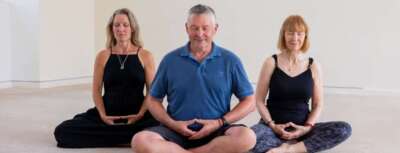
Guided by a competent teacher, the regular practice of meditation brings many benefits in the short, medium and long term:
- Increased attention and concentration
- Sharp intelligence and an ability to make clear decisions
- Reduced stress, anxiety and worry
- Listening and communication are improved
- Reduction of irritation, anger and frustrations
- Flexibility and creativity to solve problems
- Growing self-confidence and self-esteem
- Inner peace and stable happiness
- Unusual physical and mental well-being
- Positive and optimistic attitude
- Better personal and professional relationships
- Better physical and mental health
Why and how do these benefits manifest themselves?
By training ourselves in meditation with patience and perseverance, distracting thoughts will lose their hold on us and we will experience a sense of inner peace and relaxation. Our mind will feel clear and spacious, and we will feel refreshed.
Let’s take an analogy: When the sea is rough, the sediment is stirred, so the water becomes cloudy. On the other hand, when the wind drops and the sediment settles slowly, the water becomes clear. Then a beauty manifests itself, thus remaining resplendent (unalterable) on the surface of the ocean without ever coming down again. Likewise, when the agitation of our mind ceases , it becomes calm, lucid and spacious and our problems and worries disappear. We then feel naturally well disposed towards others because we reveal our deep nature which is essentially good.
To remain in meditation, focused on the breath without distractions for a while, is deeply restorative and nurturing. Like restorative sleep, meditation often brings good advice; it makes us more creative and efficient and especially better disposed to assume our daily responsibilities with increasing pleasure. It will also be easier for us to face difficult situations thanks to the hindsight and “letting go” brought by meditation.
Outside of meditation sessions, as we no longer identify with our disturbed and uncontrolled states of mind, we gain self-confidence and our choices and decisions become more measured and tailored. As a result, our self-esteem grows and gradually our relationships improve.
“When the turbulence of distracting thoughts subsides and our mind becomes still, a deep happiness and contentment naturally arises from within. If we train in meditation, our mind will gradually become more and more peaceful, and we will experience a purer and purer form of happiness. Eventually we will be able to stay happy all the time, even in the most difficult circumstances.”
The New Meditation Handbook – Venerable Geshe Kelsang Gyatso
Our next meditation classes
How long does it take to meditate to start experiencing such benefits?
By meditating only ten or fifteen minutes a day on the breath, we will be able to free ourselves from the stress and tensions usually experienced which stem in large part from our exaggerated expectations. Since the majority of our problems, including health problems, stem from pent-up stress, it’s a good investment of time and energy for so many beneficial outcomes.
Breath meditation is a first approach that, on its own, can be quite powerful. Mastery of the mind over the breath enables us to experience inner peace and contentment, regardless of the outer circumstances of our lives.
What is the point of discovering other forms of meditation?
Having gained some experience in breath meditation, it is good to move on to pragmatic meditations that cultivate familiarity with new states of mind. Only these meditations, called Lamrim (the stages of the path), allow us to free ourselves definitively from our problems and sufferings. It is these meditations that allow one to experience maximum benefits.
Meditation is a method for familiarizing our mind with virtue. The more familiar our mind becomes with virtue, the calmer and more peaceful it becomes. When our mind is peaceful, we are free from worries and mental pain, and we experience real happiness.
If we train our mind to become peaceful, we shall be happy all the time, even in the most difficult circumstances; but if our mind is not peaceful, we shall not be happy even if we have the most pleasant external conditions. It is therefore important to train our mind through meditation.
There are two types of meditation: analytical meditation and placement meditation. Analytical meditation involves contemplating the meaning of Dharma instructions that we have heard or read. By contemplating these instructions deeply, we shall eventually reach a definite conclusion or cause a particular virtuous state of mind to arise. This conclusion, or virtuous state of mind, is the object of placement meditation.
Having found our object through analytical meditation, we then concentrate on it single-pointedly for as long as possible, so that we become deeply familiar with it. This single-pointed concentration is placement meditation. Analytical meditation is often called “contemplation”, and placement meditation is often called “meditation”.
Placement meditation depends upon analytical meditation, and analytical meditation depends upon listening to or reading Dharma instructions.
If we practise patiently in this way, our distracting thoughts will gradually subside and we shall experience a sense of inner peace and relaxation.
Our mind will feel lucid and spacious, and we shall feel refreshed. When the sea is rough, sediment is stirred up and the water becomes cloudy, but when the wind dies down, the mud gradually settles and the water becomes clear.
In the same way, when, through concentrating on the breath, we calm the continual flow of our distractions, our mind becomes exceptionally clear and lucid. We should remain in this state of mental calm for a while.
Although breathing meditation is only a preliminary meditation, it can be very powerful. Through this practice we can understand from our own experience that simply by controlling our mind we can experience inner peace and contentment, without having to depend in any way upon external conditions.
This feeling of contentment and well-being helps us to cope with the busyness and difficulties of daily life. Much of the stress and tension we normally experience comes from our mind, and many of our problems, including health problems, are caused or aggravated by this stress. By meditating on the breath for just ten or fifteen minutes each day, we shall be able to reduce this stress.
Our mind will feel calm and spacious, and many of our usual problems will disappear. We shall find it easier to deal with difficult situations, we shall naturally feel warm and well-disposed towards others, and our relationships will gradually improve.